Profit sharing introduction
Profit sharing in Mambu is an implementation of Islamic banking in the form of deposit products made up of Shari'ah law-based contracts. The principles of Islam, expressed by Shari'ah law, provide the foundation and the contracts built on these principles provide the structure for financial products. Mambu offers a foundation to support Islamic funding deposit-based contracts.
Principles of Islamic banking
The basic principles that all Shari'ah-compliant products adhere to are:
- Shari'ah-based: Operating on Shari'ah principles, which prohibit the charging or payment of interest (riba)
- Prohibition of interest: Charging, collecting, or paying interest within financial contracts is strictly prohibited.
- Asset-backed financing: Transactions are real asset based. Due to existence of goods and services no expansion of money takes place and thus no inflation is created.
- Profit or loss sharing: Financial contracts ensure the equitable sharing of profits or losses among participants.
- Avoidance of Haram transactions: Transactions involving forbidden (haram) products are strictly forbidden.
- Transparency and ethical considerations: Islamic banks often emphasise ethical and socially responsible investments. They ensure transparency and adherence to Shari'ah principles.
- Zakat and charity: Islamic banks offer accounts and products that facilitate Zakat (Islamic almsgiving) payments. They may encourage charitable giving as part of their operations.
- Contractual framework: specialised contracts, such as Mudarabah (profit-sharing), Murabaha (cost-plus-profit sale), Ijara (leasing), and more, which comply with Shari'ah principles are used.
Profit sharing process
There are three key stages:
- Profit calculation - to get a final equivalent profit rate for the Pool.
- Profit Approval (currently unavailable)
- Profit distribution (currently unavailable)
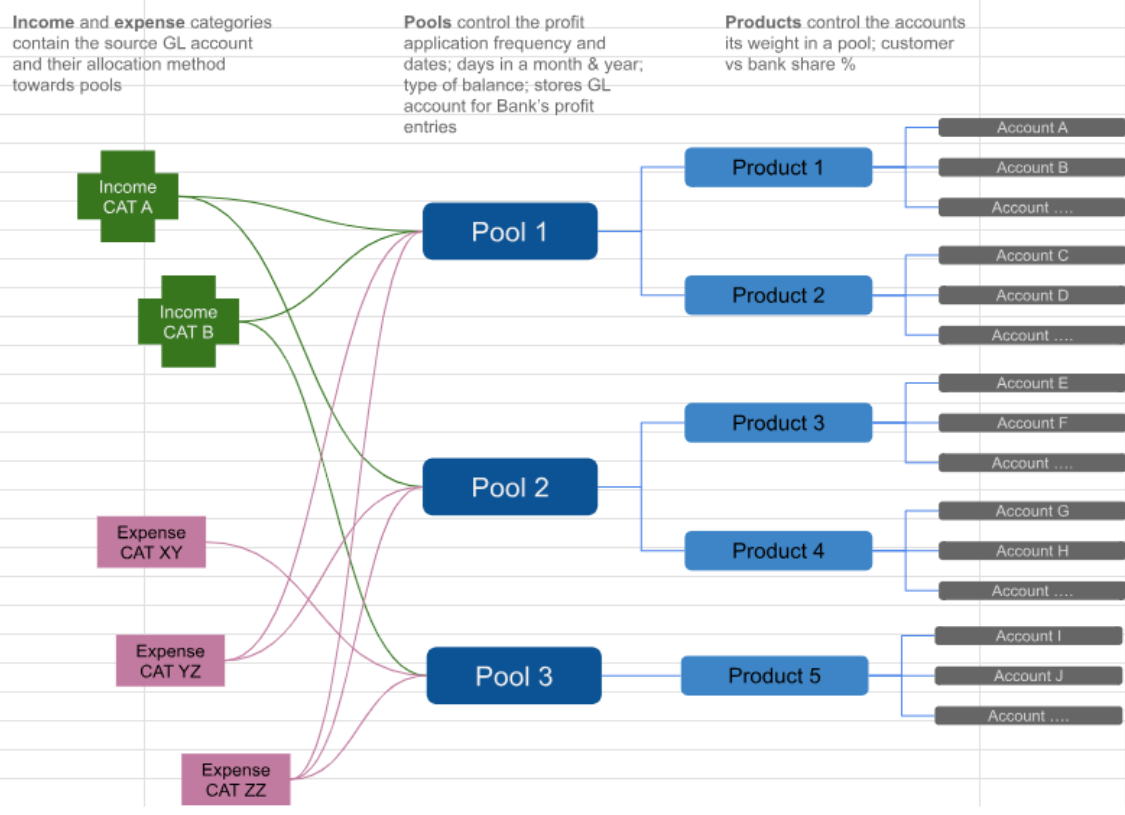
The diagram below outlines the key parameters involved in profit calculation:
- Income & expenses: Represent the profit for the investment period and can be allocated across multiple Pools based on specific allocation methods.
- Pools: Used to define the profit calculation frequency, the number of days in a month and year, and the type of balance used for calculating the average balance during the investment period.
- Product: Manages the weighting of accounts within a Pool. The daily profits are applied, and the percentages are shared between the customer and the bank.
Cloud hosting providers
Profit sharing tools can be used in core systems across different cloud platforms, such as GCP, AWS, and Azure. It is hosted in both shared and dedicated instances, including sandbox environments.
Restrictions and security
For optimal performance and security, it is recommended to use a dedicated environment.
Early Access Limitations: Some restrictions may apply to features in early access. Please discuss your requirements with your Mambu Customer Success Manager.
These limitations ensure efficient utilisation of early access features while maintaining system stability and security.
Islamic Profit Sharing utilises High Availability setup that includes multiple availability zones for both compute and data services, ensuring Recovery Time Objective (RTO) of <5 minutes and Recovery Point Objective (RPO) of 0 minutes. Cross-region Disaster Recovery (DR) functionality is not currently available.
User rights
A user is anyone who accesses and uses Mambu via the UI or the API. Users are assigned permissions which determine the information they can access and the tasks they can perform.
For more information about see Understanding Users, Roles, and Permissions.
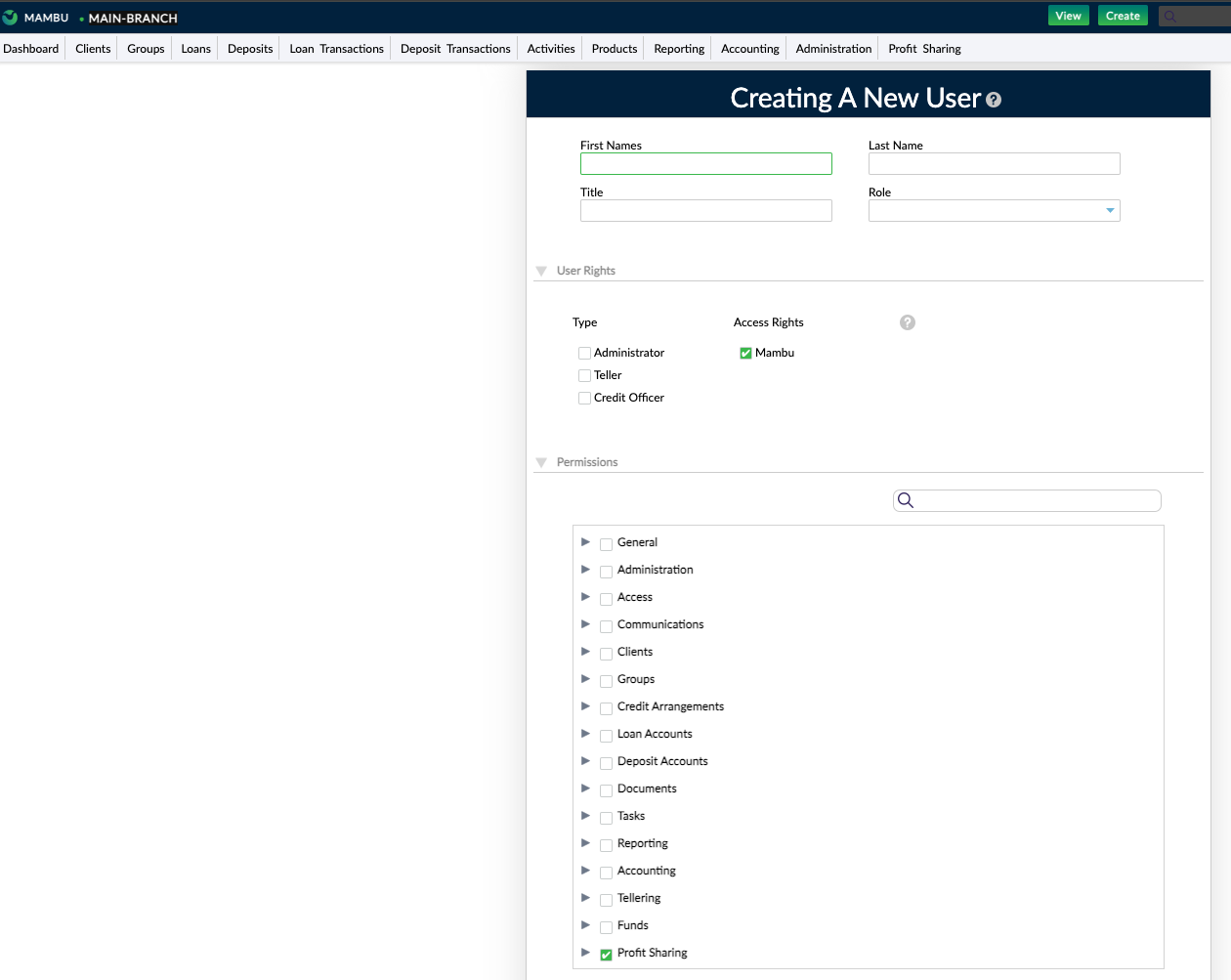
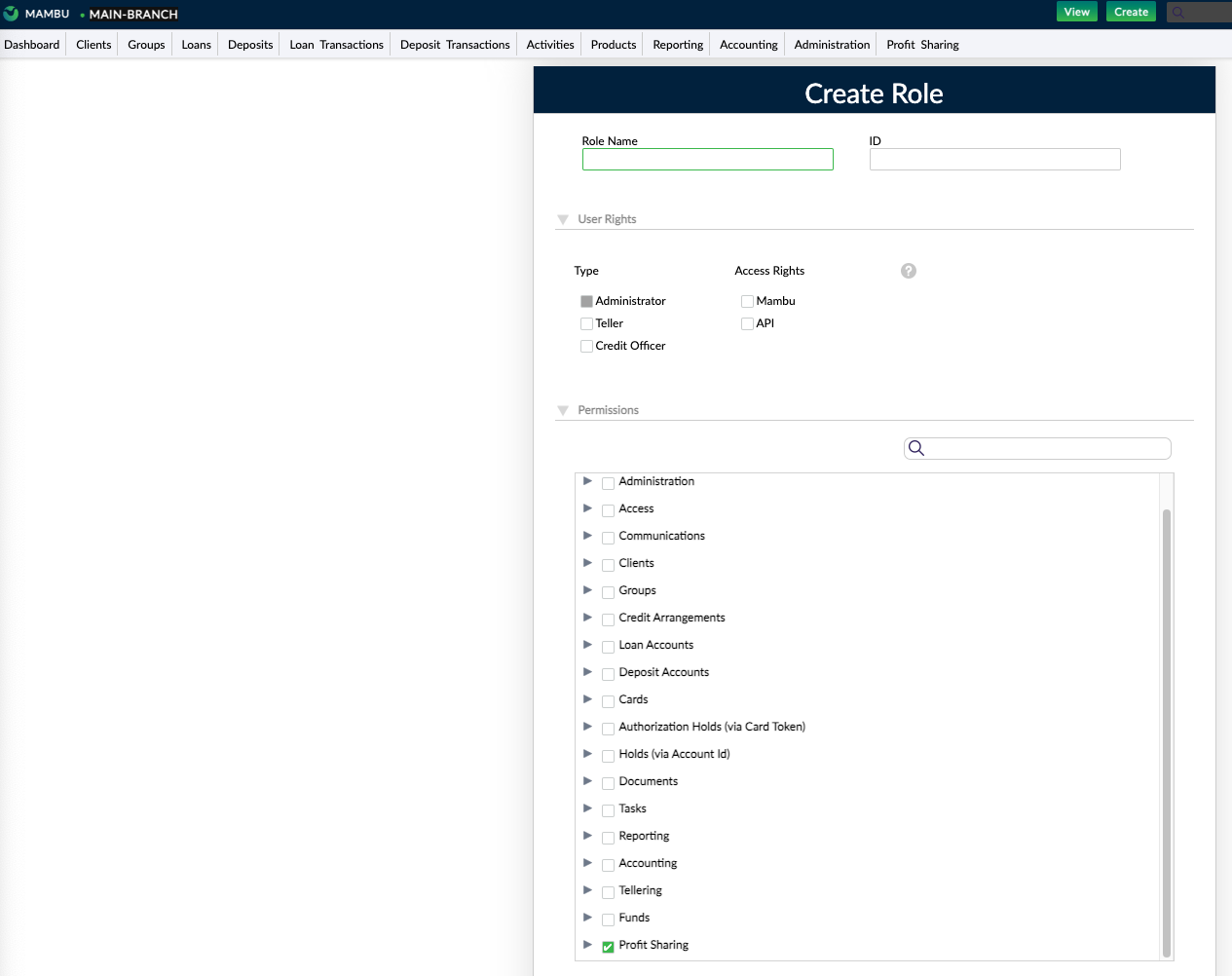
For usage of Islamic profit sharing it is important to mark Profit sharing in all places where are you define access rights:
1. Create a New User
2. Create a Role
3. Create API Consumer
Getting help
For help with Islamic Profit Sharing, please see the various channels available that you can use on the Getting Support page.
The release notes for Islamic Profit Sharing can be found on our Release Notes page.